



Illustration: Angelica Alzona
The Romance Writers of America, one of the country’s largest writers associations, is in chaos. In late December, the RWA board made the perplexing and instantly controversial decision to censure, suspend, and ban author Courtney Milan from ever holding national office in the organization again—essentially, because she called a 20-year-old book a “fucking racist mess.” That move set off a chain of events that now threatens to rend the institution apart in a battle for the heart and soul of not just RWA, but the romance genre as a whole. It has been a spectacularly public fight, one that reflects a long, contested history of who gets to be visible in romance.
RWA, an organization founded almost 40 years ago by a black woman, has frequently been an unfriendly place for marginalized writers, and attempts to change that have been met with pushback that now threatens to destroy the institution itself. Romance novels, at their most fundamental level, are about protagonists being seen clearly and loved—and this is a story about who gets to be seen and valued in the romance genre, and whose pain matters.
As an author of historical romances who served four years on the RWA’s elected board of directors, Milan has been one of the most prominent voices in the struggle to make RWA a more equitable environment. (In fact, she just won a service award.) She’s also known for her vocal Twitter presence, where she doesn’t shy from calling out injustice in very blunt terms, whether it’s around racism in romance or the strange plagiarism saga of #CopyPasteKris. The efforts of Milan and many others had put the RWA on a path to helping create a more inclusive organization, genre, and publishing industry more broadly. As 2019 drew to a close, it looked like years of dedicated effort and activism by many people, particularly by women of color, to build a more inclusive genre and an RWA equipped to fight on behalf of its marginalized members, were bearing fruit.
But that hope is collapsing. After Milan’s censure, board members resigned en masse; two presidents left under a cloud of controversy. Major publishers, including Harlequin, have pulled out of RWA’s annual national conference. Members are furious, and the work it will take to restore their trust in the organization is so enormous it’s potentially insurmountable.
“Our professional organization has just fallen down on us so incredibly,” novelist Adriana Herrera and the president of the New York City chapter of RWA told me. “Everything has been undone.”
RWA’s latest statement invites members to join “in rebuilding an RWA that serves its diverse and talented members well into the future,” and expresses the belief that “this community is worth saving.” But the last three weeks have exposed fissures so deep in the organization, not everybody shares that confidence.
Milan revealed the RWA’s decision to censure her on December 23, via the Twitter account of her friend and fellow writer Alyssa Cole. “One of the reasons I believed in RWA was because I saw how hard my friend, Courtney Milan, worked to push the organization’s inclusiveness,” wrote Cole. “Today, the day before Christmas Eve, RWA notified her they’d agreed with ethics complaints filed against her for calling out racism.” The ruling was based on two ethics complaints, filed by members Suzan Tisdale and Kathryn Lynn Davis.
Tisdale, an author of historical romance, was in the process of launching her own indie digital publishing house, Glenfinnan Publishing. But one of her acquiring editors was a woman named Sue Grimshaw, who had become a source of controversy in August of 2019, when another new indie publisher, Jack’s House Publishing, announced her as a new hire. A discussion ensued about Grimshaw’s very right-wing likes on Twitter, including a positive post by Charlie Kirk about ICE raids in Mississippi; a video from African American Trump supporters Diamond and Silk denouncing the concept of white supremacy as a Democratic hoax “to intimidate black people”; and reportedly many others, which she promptly deleted. (Grimshaw has since deleted her Twitter account, and did not respond to Jezebel’s request for comment.)
This discovery grew into a widespread Twitter discussion about the important institutional role that Grimshaw had played as the romance buyer for Borders, at a time when Borders commonly shelved all African American authors in a separate section together, away from specific genres, like romance. It raised questions about how she’d made her decisions in such an important gatekeeping role, and whether she had given African American writers a fair shot at prominent placement. (Though, to be clear, the policy was the case across Borders—not just in romance.) Milan weighed in, but she was far from the only participant.
Jack’s House dropped Grimshaw, but Glenfinnan didn’t. Tisdale posted a long video to her Facebook defending her: “Sue’s not a racist, and she is not a bigot. She’s a really nice lady, and I’ve talked to her lots of times,” Tisdale insisted. Meanwhile, Milan—who is herself half Chinese—did a Twitter thread about Somewhere Lies the Moon, a book by Kathryn Lynn Davis, another of Tisdale’s acquiring editors. Originally published in 1999 but republished in 2014, Milan called it a “fucking racist mess” for the way it portrayed Chinese women as wholly submissive: “Here is our half-Chinese woman remembering her past, where she is explicitly told that the future is the West, and that for Chinese women, compliance is the rule,” Milan argued in one post; she also pointed out the ridiculousness of the fact the blue-eyed protagonist looked down the entire time she lived in China, so much so that her neighbors didn’t even know she was blue-eyed.
“As a person of color, you walk around in this world feeling like there’s a perpetual target on you”
In response to Milan’s critique, Davis filed an ethics complaint with RWA, as did Tisdale, who wrote that Davis had “immersed herself into the Chinese culture for six years before she even began to write the aforementioned novel.”
“It is my belief that Ms. Milan targeted Kathryn Lynn Davis,” wrote Tisdale, “simply because Ms. Davis is one of my acquisitions editors and Ms. Davis happens to be white. I can find no other reason for her to attack Ms. Davis in this manner; certainly nothing based on any factual evidence.” Davis’s complaint alleged that Milan’s tweets had cost her a three-book deal; she told Jezebel in a statement that she was in the final stages of hammering out a three-book deal when Milan tweeted and the offer was withdrawn.
Tisdale focused on Milan’s Twitter presence and the fact that, at the time, Milan was chair of the RWA’s ethics committee. She called Milan a bully, and in a jaw-droppingly inflammatory turn of phrase, wrote, “This is akin to putting a neo-Nazi in charge of a UN human rights committee.” The complaint included a threat: “If the board does not demand that Ms. Milan immediately cease and desist with this online bullying, with the Hateful tweets against me, my company, my authors, and acquisition editors, I will not remain quiet and I will move forward with legal action.”
Davis, in a statement to Jezebel, protested that Milan didn’t read the whole book and her protagonist wasn’t submissive, but rather “strong and determined.” She continued: “You can understand how publicly, loudly, and abrasively levying accusations of racism based on such details taken out of context would cause me deep pain. As a result of these accusations, I have suffered both financially and personally.” Hence she turned to RWA, she said, and was told that her only option was a formal complaint.
In her response to the complaint, Milan fiercely defended her right to criticize Davis’s book in the strongest terms possible: “Negative stereotypes of Chinese women have impacted my life, the life of my mother, my sisters, and my friends. They fuel violence and abuse against women like me,” Milan wrote, adding that such stereotypes dishonor the memory of the women she’s descended from. “I have strong feelings about these stereotypes, and when I speak about them, I use strong language. It is hard not to be upset about something that has done me and my loved ones real harm.”
But ultimately, the board ruled that Milan was in violation of section of RWA’s member code of ethics—“Repeatedly or intentionally engaging in conduct injurious to RWA or its purposes”— and she was censured, suspended from RWA for a year, and banned for life from holding nationwide office in the organization.
The outcry was immediate and fierce; while many were furious on Milan’s behalf, the reaction went beyond the specific incident. “As a person of color, you walk around in this world feeling like there’s a perpetual target on you,” explained the writer LaQuette, who just ended a two-year term as president of RWA’s New York City chapter. “You know that in theory. But it’s not until something happens like this that you realize, wait, that target isn’t theoretical, that it can actually become concrete, depending on who you’re dealing with and what their motivations are…It was only a matter of time before I crossed paths with someone who felt I shouldn’t be able to say what I felt, and that would have ended up being me.”
News of Milan’s suspension came at the worst possible time for anybody who wanted her to go away quickly and quietly: In the liminal period of the holidays, people absolutely had the time to protest on Twitter, and the community absolutely erupted. It didn’t take long for questions to bubble up about the chain of events that led to Milan’s censuring, and whether proper procedure had been followed. (Romance is full of lawyers and former lawyers, including Milan, a former Supreme Court clerk.) And that’s when it got really messy.
Romance Writers of America was founded in 1980 by editor Vivian Stephens, an African American woman from Houston, working with a small group of local writers, including inaugural president Rita Clay Estrada. As much as any other single person, Stephens helped usher in the modern contemporary romance novel during her tenure at Dell’s Candlelight imprint, where she launched the “Ecstasy” line that demonstrated the marketability of books that were more American in focus, more modern in their outlook on careers and gender relations, and more explicitly erotic than the softer-focus contemporary-set stuff available elsewhere.
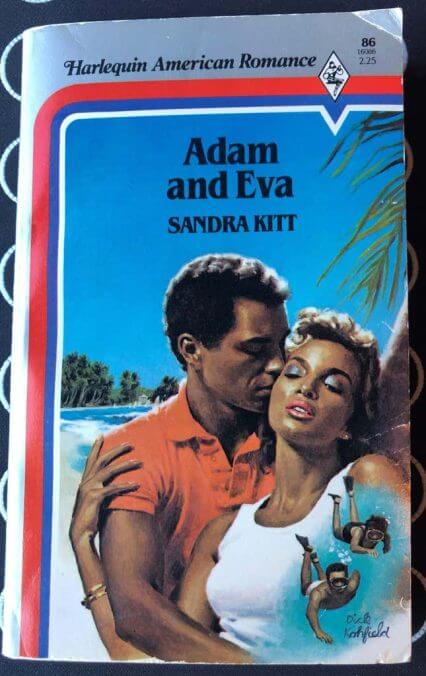
RWA was formed right on the eve of a big romance boom of the 1980s that would launch the careers of many authors, including Nora Roberts. The purpose of the organization, per the bylaws, was to “advance the professional and common business interests of career-focused romance writers through networking and advocacy and by increasing public awareness of the romance genre.” It became one of the big intermediators between writers and publishers, and it’s now one of the biggest writers’ organizations in the country, bigger than the Mystery Writers of America and close to the size of the Authors Guild. “When we have these events for RWA, like the conference every summer, every publisher is there,” explained LaQuette. “They are looking for new writers. They are looking for new people. They are looking to connect with established writers.”
But since its inception, there has always been a certain amount of tension over RWA’s priorities. Was it a social club? A professional networking group? What constituted “professional,” anyway? (See: the great swan hat controversy of 2007.) Was it for published authors, or unpublished authors? Was it a conduit between writers and publishers? Or was it potentially a body for collective action, including against publishers? Equally important but less tangible was the question of the right way for a woman to act, even in an organization composed largely of women, and just how important it was to be nice and conciliatory, not to raise a big, disruptive fuss—even, or perhaps especially, over issues of racial and queer representation.
Was RWA a social club? A professional networking group? What constituted “professional,” anyway?
“Romance very much labors under a ‘be nice’ culture, and it always has,” said Sarah Wendell of Smart Bitches Trashy Books, a popular blog that faced some pushback for its willingness to write negative reviews when it first came along in the mid 2000s. “If you don’t have anything nice to say, don’t say anything at all.” In 2009, RWA told another blogger, Dear Author’s Jane Litte, that she couldn’t renew her membership, because critical pieces she’d written and her making fun of bad books on Twitter “indicate you do not support RWA or romance authors.” (Litte promptly published the letter.)
But the advent of the internet made it harder and harder to keep a lid on dissent within the genre and the RWA’s ranks. At first, it was through listservs; then it was through blogs like Dear Author and Smart Bitches Trashy Books. Traces of earlier fights are scattered across the internet in various comment sections like decaying radioactive isotopes. But increasingly, these arguments happen in full view of the general public on Twitter; even fights that start elsewhere, like Goodreads or Facebook or private email loops, often eventually migrate to Twitter in one way or another. It’s a popular platform that levels the playing field: It’s damn near impossible to squelch dissenting voices on Twitter.
The internet, too, has challenged RWA’s position within the romance ecosystem. RWA conferences are full of panels on various aspects of self-publishing, but nobody needs RWA to put their book on Amazon. They’re not a collective bargaining agent; they can’t, say, negotiate better self-publishing terms with Amazon. But romance authors need a fierce advocate more than ever, because they’re increasingly at the mercy of powerful tech platforms, as major channels for mass-market paperbacks like B. Dalton, Waldenbooks, and Borders have vanished. RWA’s presence at least means there’s somebody authors can call if they need an institutional voice to advocate for them. “If you are the member who calls in, who says, ‘Facebook for some reason shut down my author site, and I had 40,000 followers,’ we have contacts at Facebook and at Amazon and at Barnes and Noble that we can get in touch with at a micro level to help our members immediately,” former president HelenKay Dimon told me.
But in recent years, perhaps the central dispute within the industry has been about inclusion and intersectionality. While there’s always been a feminist thread in romance, the genre has also been dominated by straight white women for much of its history. Despite Stephens’s central role in shaping the modern romance, she was frustrated by bosses’ foot-dragging, even as she acquired diversely. Plantations abounded in historical romance well into the 1990s, as did books featuring appalling depictions of Native Americans with the word “savage” thrown around. Black authors have frequently been relegated to “ethnic” imprints and even shelved elsewhere in bookstores. And often, that “be nice” culture has suppressed attempts to fight any of it.
In 2005, RWA inserted a survey into the organization’s member magazine, Romance Writer Report, asking whether romance should be defined as between two people—or one man and one woman. In a post addressing the current controversy, bestselling author Nora Roberts (who is no longer an RWA member) revealed that she wrote a letter of protest about the survey. “I received an email from the then president urging me to be quiet, basically, explaining to me–and I am not kidding–I didn’t understand that the lesbians would take over RWA,” Roberts wrote. “Jeez, those terrifying lesbians!” The survey ultimately went nowhere, thanks to the ensuing community uproar, but it was essentially a motion to enshrine discrimination in the organization’s bylaws.
In 2015, I sat in the audience at the RITAs—the trade association’s award show, named for the organization’s first president—as nominees for Best Inspirational Romance included a story about a concentration camp commandant falling for a Jewish prisoner. Earlier that week, an editor was asked about whether her imprint would be moving in a more multicultural direction, and told a room full of writers in a recorded session that “whenever we get something strong like that in, in a multicultural topic or author, we can defer to our sister imprint who really does focus on publicizing those titles, marketing those titles, getting placement in stores.” (RWA would eventually send a stern letter.)
It was the first national conference for writer Nana Malone. While it was great in some respects, she told me, “there were those moments I would go back to my hotel room and be like, oh, that didn’t feel great.” For instance, she’d walk up to a table and introduce herself and attempt to strike up a conversation. “You’re just trying to do the thing. And half the table kind of gets up and leaves? And it’s not one time. It’s not like, oh, they all had to go to the same panel. No, it happened more than once. And I wasn’t the only one to experience that.”
But it was also a turning point, when a critical mass of people began to recognize there were problems with the genre and within the organization that needed to be addressed. First came a push for diverse books, then one for “own voices” books. In other words, it wasn’t enough for white women to add African American characters, or for straight women to write m/m romance for an audience dominated by straight women. The genre needed to actively work to support queer authors and authors of color themselves. It’s been a process of fits and starts, chronicled by Lois Beckett in a long piece at the Guardian. A dedicated core of members, however, has worked relentlessly to change this state of affairs, working both within the structures of the RWA and also, often, using Twitter, a tool that was easily available even to those long locked out of institutional power.
I wondered who would get RWA in the end, and what would be left of it.
Milan has been one of the loudest, bluntest, and most consistently fearless voices in the fight, relentless in speaking up on behalf of marginalized authors and against the type of behavior that has made romance such an unfriendly space for them. In 2015, she was just beginning her four-year tenure on the board of directors and made change a priority, serving as chair of a diversity task force that delivered a report on the issues they faced and recommended steps to address them. “I felt like there was an industry organization that was advocating for romance authors, and it should do its best to advocate for all romance authors,” she explained her motivation to me. “At this point, I’m looking at it and I’m thinking I was fairly naive, but that’s the answer. It seemed like the right thing to do, and you should try to do the right thing.”
Milan’s efforts and high-profile position made her a lightning rod, the “diversity scapegoat,” as she puts it. In Tisdale’s complaint, she pointed out, “there’s these pages and pages of screenshots from all these people who aren’t me.”
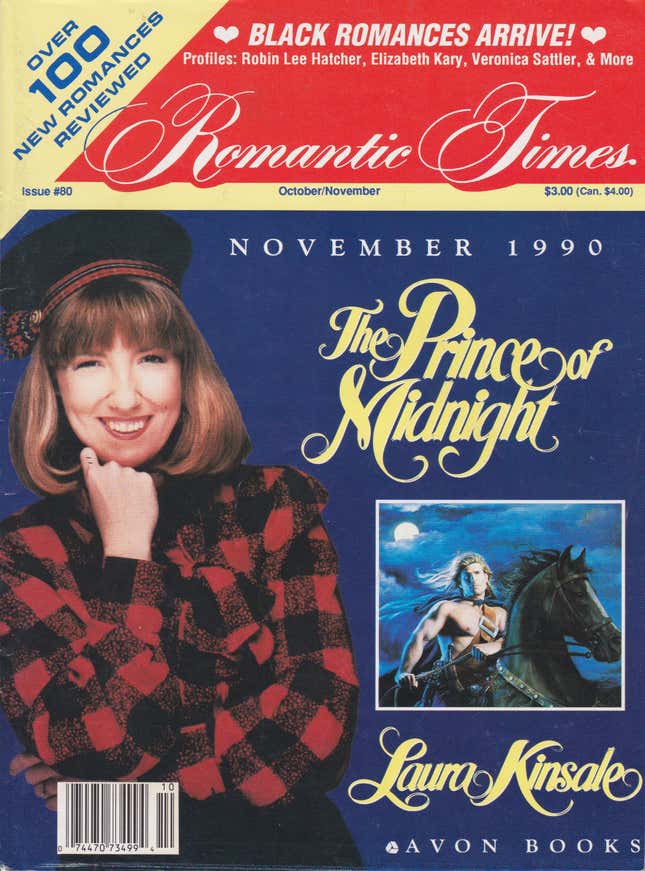
Frequently, RWA itself has been the site of those battles. Following the pattern set by #OscarsSoWhite, romance fans and writers on Twitter began tracking the awards’ absolutely dismal diversity rate. The outcry over the finalist nominations, released in March of 2019 and once again dominated by white writers, was so significant that the RWA board released a statement: “The Board apologizes to our members of color and LGBTQ+ members for putting them in a position where they feel unwanted and unheard.” The board acknowledged a “serious problem with reader bias in the judging of the RITAs.”
Changes were already in the works at that point, Dimon told me; the process for second-round judging to select winners had been shifted in advance of the 2019 awards, so that judges for each of the categories had to include more people of color and more queer people, and had to include people outside of RWA authors, like booksellers or librarians. Ultimately, at the 2019 ceremony, RITAs were awarded to M. Malone and Kennedy Ryan, the first black women to win in the awards’ nearly four-decade history, and Nisha Sharma became the first woman of South Asian descent to win.
It was very clear the fight was not over, but the RWA board that took over in September of 2019 was encouragingly diverse. “I was incredibly happy when I left, because I felt the board that had been elected was a really good board,” said Dimon. “It was very diverse, it was a good mix of people who’d been there for a little while, so they had the institutional knowledge and the history and understood how we did things and why, and they had new people, which means new ideas, new energy.”
It didn’t take long for that to unravel, in truly spectacular fashion.
In 2018, at the RWA’s annual conference, I watched author Suzanne Brockmann accept a lifetime achievement award with a fiery speech that explicitly called out the industry’s long history of blocking efforts at diversity and inclusion. She delivered a fierce call to action: “RWA, I’ve been watching you grapple as you attempt to deal with the homophobic, racist white supremacy on which our nation and the publishing industry is based. It’s long past time for that to change. But hear me, writers, when I say: it doesn’t happen if we’re too fucking nice.”
The effect of Brockmann’s speech was electric. She received round after round of applause and, eventually, a standing ovation—a room full of women on their feet, cheering for Brockmann’s encouragement to rock the boat. It felt like I was witnessing a piece of genre history. But I also watched a trio of white women in front of me stay resolutely seated. I wondered who would get RWA in the end, and what would be left of it.
Almost immediately, there were problems with RWA’s handling of the ethics complaint against Milan. For one thing, members’ social media accounts are explicitly excluded from the organization’s code of ethics, which should have meant that complaints about Milan’s tweets were invalid. For another, the ethics committees’ findings were presented to the board by then president-elect Damon Suede, acting as liaison to the board—despite the fact that, as Dimon informed me, there was no ethics committee board liaison in the process at that time. “RWA recognizes that there were significant deficiencies in the ethics process and the way the recent ethics matter was handled,” said an RWA spokesperson. They have since announced an audit of the process by an independent firm.
The complaint came to RWA leadership at the very end of HelenKay Dimon’s term, shortly before the turnover to then president-elect Carolyn Jewel. The process for RWA’s handling of ethics complaints is that they would go first to the executive director, a paid staff position that was then held by longtime RWA employee Allison Kelley, and then to a panel selected from a large pool of ethics committee members. At the time of the complaint, Milan was still the chair of the organization’s ethics committee.
“I was told by the executive director that RWA’s attorney believed Courtney had to step down, that there was a liability issue,” Dimon told me, so she contacted Milan and asked her to step down. Milan—stuck partway through a road trip, next to her broken-down car in Wyoming—agreed. Allison Kelley also recused herself, and turned the matter over to deputy executive director Carol Ritter. On the last day of Dimon’s tenure, she told me, she referred the issue to incoming president Carolyn Jewel, telling her “that I had concerns with this being an ethics case at all, and that now unfortunately I had to pass it on to her,” because Dimon’s term was over.
At that point, RWA appears to have convened a panel entirely separate from the existing ethics committee to hear the complaint. In an email, former ethics committee member Ruby Lang (who was appointed by Milan and resigned December 24) told me that she’d been told by former president Carolyn Jewel that a second panel had been gathered and firewalled from the original committee to avoid the appearance of a conflict of interest. Hence, Lang didn’t even hear about the complaint until Alyssa Cole posted it on Twitter; she had assumed Milan resigned for other reasons. Other ethics committee members Rachel Grant, K.M. Jackson, J. Kenner, and Mia Sosa also tweeted that they only found out about the complaint when it hit Twitter. Sometime in October, Allison Kelley also stepped down as executive director and Ritter took over the top paid staff job.
On December 17, in his role as board liaison, Suede presented the findings of the ethics committee report to the board. Because executive sessions are confidential and everybody involved is basically legally muzzled, we don’t know what was said in that meeting, only the vote count for the sanctions against Milan: Ten aye, two nay, two abstentions.
What we do know is that almost immediately after Milan dropped all her documents online (the report, the complaints from Tisdale and Davis, and her responses), board members began resigning. First Chanta Rand, then—after a vote to reverse the decision against Milan—another eight members, more than half the board, resigned from their positions en masse. Prohibited from speaking about what happened in an executive session, which is confidential, they made a joint statement, saying they resigned because, “we no longer trust or have confidence in RWA’s leadership,” adding that, “We believe this should never have gone to members of the Ethics Committee. We extend our sincere apologies to Courtney Milan and the romance community.”
At that point, almost all of the women of color were gone from the board.
As if the problems in the handling of the ethics complaints weren’t enough, questions quickly emerged about whether Damon Suede—who was elevated from president-elect to president when Carolyn Jewel resigned just days into the crisis—was ever even eligible to be president of RWA in the first place.
Suede, who rose to prominence in the romance world as an “own voices” author of queer romance, quickly became the focal point of criticism for the board’s decision, given his role as committee liaison and everything that followed once he stepped into the role of president. That’s one of the central ironies of this story—he was widely presumed to be someone who would work for diversity and inclusion. “I considered him an ally, as someone that would advocate for marginalized voices,” said Adriana Herrera.
But there were other issues, too. The publisher Dreamspinner Press recently announced after months of complaints by authors about late payments that they were hiring a firm to handle financial restructuring that would allow “structured repayment of all past due amounts.” Four community leaders leaders—Adrianna Herrera and LaQuette of RWA NYC, Xio Axelrod of Philadelphia Romance Writers, and Anna Zabo of the Rainbow Romance chapter—wrote a joint letter to the RWA, asking for guidance to authors about how to seek legal representation and more clarity on how RWA planned to support them. But Herrera revealed on Twitter the authors received a disappointing response, “saying RWA counsel had advised them not to make public statements, that they could not provide legal advice and that if people felt like they needed a lawyer they should get one.”
And then there’s the question of Stud Planet.
Suede—who did not respond to Jezebel’s requests for comment—is a high-profile Dreamspinner author. Just a couple of days before the Milan story broke, in fact, he posted on his Facebook profile gushing about homemade Christmas cookies gifted to him by the executive editor of Dreamspinner. Suede had recused himself from board discussions of Dreamspinner. But in private correspondence reviewed by Jezebel, Suede reassured two different people that Dreamspinner was fine.
Authors quickly organized to pressure Suede and executive director Carol Ritter to step down for their involvement in the handling of the complaint and everything that followed. The effort with the sharpest teeth was the recall petition organized by the members of CIMRWA, the organization’s “Cultural, Interracial, and Multicultural” chapter. According to the bylaws, if 10 percent of voting members of the organization sign on to a recall, the president is supposed to be removed immediately.
And then there’s the question of Stud Planet.
Bylaws require that the president must be the author or co-author of at least five published, eligible romance novels, meaning they had to have been commercially available and more than 40,000 words long. RWA confirmed with me the list of five books that Suede used to run for president, which included a 2016 limited release: Stud Planet. But evidence for Stud Planet’s existence is surprisingly scant—no GoodReads presence, nothing on Suede’s website. The book is listed at Books on Print, “the leading bibliographic database for publishers, retailers and libraries around the world.” As Milan quickly pointed out, that entry had last been edited January 8.
When I contacted Dreamspinner Press, CEO Elizabeth North told me that Stud Planet was a republication of a previous work, Grown Men. “After the contract expired with its first publisher, reader requests were strong, so we published an updated version,” North explained. She attached a screenshot of the book on their website, as well as PDF and ePub files; those files contained Grown Men, clocking in at roughly 30,000 words, as well as a previously published prequel, plonked at the end. She confirmed that she had updated the Books on Print entry—to reflect that it was out of print. When I asked if she could forward correspondence that confirmed publication from April 2016, she told me that correspondence was confidential, but that Dreamspinner “didn’t promote it as a general release. It was done as a limited edition for the fans of the universe, but the book doesn’t match Damon’s brand so he didn’t want it available wide.” When I asked how it was made available to those fans, she told me that I should direct any future questions to Suede—who did not respond to Jezebel’s request for more information.
Stud Planet, in other words, likely did not meet RWA guidelines on length alone, meaning Suede never qualified for the position of president in the first place. “We believe that Mr. Suede made his submission in good faith, and that Ms. Ritter verified the book’s eligibility in the standard RWA manner,” which did not involve actually viewing the contents of the books in question, just checking the word count, according to an RWA spokesperson via email. “We now recognize that there are questions as to the eligibility of this book. These questions likely will prompt an examination of RWA’s verification procedures and eligibility policies, but as Mr. Suede is no longer in office, we do not plan on further investigating STUD PLANET specifically.”
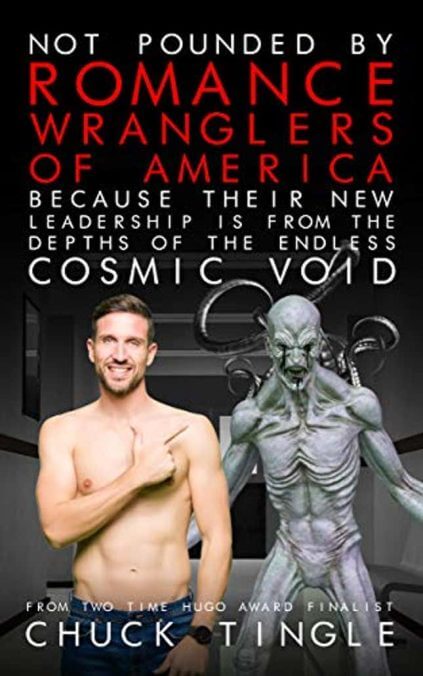
Even Chuck Tingle—author of high-concept erotica who has been warmly embraced by the online romance community—felt obliged to log on Twitter and publicly deny Suede’s one-time claim that he knew who Tingle was: “it has brought to my attention that there is scoundrel name of damons that likes attention and is saying he knows chuck for attention. i do not know him he is lying.” Tingle further declared his allegiances by releasing a special new story about the conflict: Not Pounded By Romance Wranglers Of America Because Their New Leadership Is From The Depths Of The Endless Cosmic Void.
Finally, on January 9—more than two weeks after this trainwreck was set into motion—president Damon Suede and executive director Carol Ritter resigned. C. Chilove, one of the CIMRWA leaders who organized the recall petition, said on Twitter that RWA had confirmed they’d collected enough verified signatures to force a recall election.
The events of the last two weeks have been disastrous for the once-mighty Romance Writers of America. Members are angry, trust in the group’s leadership has been shredded, and the entire controversy has dragged the name of the organization and the genre straight through the mud. The road back for RWA will be long, hard, and far from certain.
RWA’s authority has taken a critical hit. Dozens of agents have signed a public letter saying they won’t work with RWA until the organization gets its house in order. Harlequin and Avon, two of the biggest brands in the genre, who typically have an absolutely massive presence at the annual RWA conference, announced on January 9 that they were pulling out of the 2020 meeting, citing their commitment to diversity and inclusion. Other publishers followed suit.
Nor is this simply a matter of reputation—there’s likely to be significant financial fallout. “Publishers like Avon & Harlequin are big sponsors [for the conference]—tens of thousands of dollars worth,” HelenKay Dimon explained via email. Losing publishers loses RWA both money and attendees, which jeopardizes the conference itself and puts RWA in an even worse position: as Dimon explained, cancellation of the conference would result in “significant” penalties from the hotel where it is booked.
“I don’t know that we can come back from this”
One of RWA’s fiercest roles has been as the guardian of the public perception of romance. They hand out grants to academics studying romance. Conferences going back decades featured panels on dealing with unfriendly and dismissive members of the media. Every year they hand out a “Veritas” award for media coverage they see as particularly fair—an award that I won in 2016, for an article about the history of Harlequin. And now, the story of their rapid, incredibly public meltdown has been covered in gory detail by the New York Times, the Associated Press, the Guardian, and many other outlets, reaching people who don’t typically think about romance novels with a vastly different image than the one RWA prefers to project.
Most importantly, members are seriously reevaluating their ties to the organization. “A lot of people don’t really need RWA anymore,” C. Chilove pointed out. “They are advanced in their career, they have their agent, they have their books, they’re working on those deals.” Sarah Wendell told me something similar, that the people leaving RWA “are more of an asset to RWA than RWA is an asset to their careers.”
“I don’t know that we can come back from this,” LaQuette told me. “I don’t know that my faith in RWA—or what I believed it could represent if it ever got its act together—remains.” RWA has announced “a thorough audit” of their ethics process, promising to share findings and recommendations with the membership when it’s done, but trust in the institution has reached such a low point it’s hard to see that mending fences. The latest communication from the organization says that they won’t even fill the positions of president and secretary until the annual election in August, when all of the board seats will be open.
Whatever comes out of the controversy, whether a reborn RWA or a replacement, Malone said it’s clear what the central tenet needs to be: “Love for all, point blank. If that’s not what you’re here for, you probably shouldn’t sign up or pay dues or do any of that stuff because it’s not for you.” It’s not simply a matter of principle, either. One of the most commercially promising developments for the genre in an era when hardworking writers have to compete in an economically brutal landscape is the breakout success of diverse authors like Jasmine Guillory and Helen Hoang in trade paperback, reaching mainstream audiences who’ve never cracked open a Harlequin Presents. One of the most popular romance novels of the last year was Red White and Royal Blue, a gay romance. Many younger readers have grown up reading diverse YA. RWA could have been part of pushing for that future, but now, it’s hard to see how.
In the midst of the tumult, Bowling Green State University’s Popular Culture Library, which has an impressive collection of archival material related to the history of romance, tweeted out a picture of the first board of RWA. That board included two black women (Vivian Stephens and her sister) as well as a Latina author, Celina Rios Mullan. “The issue in RWA is not, per se, that we didn’t have diversity. Because we have diversity. Our issue was inclusion and access,” C. Chilove told me. That has been the case for a very, very long time. The photo testifies to a long history of missed opportunities to do better, in RWA and in the genre more broadly. For a while, it looked like the organization was finally getting it right, after years of chances that were thrown away. Then they blew it all up.
Correction: Originally, this story stated that the 2015 RITA award for Best Inspirational went to a romance about a concentration camp commandant falling for a prisoner; it was nominated for two, but did not win. We regret the error.
 Keep scrolling for more great stories.