

The ‘Fatal Attraction’ Series Fails to Show Any Actual Attraction Between Its Leads
The erotic thriller dies another day in this padded, dull adaptation of the 1987 classic for Paramount+.
EntertainmentTV
Currently, there seems to be a voracious appetite for an erotic thriller revival. This month, Criterion presented a series of 16 examples of the noirish subgenre that exposed (among things) the dangers of sex and monogamy-deviation, and which, not coincidentally, spanned the “plague years” of the AIDS epidemic. Last year, the popular podcast You Must Remember This devoted a 12-episode run to the form and Vulture published an erotic thriller package. Also last year was Deep Water, a woebegone team-up of now-exes Ben Affleck and Ana de Armas. That was directed by Adrian Lyne, who made Fatal Attraction, the 1987 phenomenon that proved the subgenre had legs after 1980’s Dressed to Kill and 1981’s Body Heat kicked it off.
Now that Fatal Attraction has been spun into an eight-episode series, premiering Sunday on Paramount+, it is abundantly clear that what people are craving is a meal from a restaurant long closed. The erotic thriller cannot work in 2023 like it did in 1987. We want more from our movies now than scantly clad parables with barely there characters and heavy-handed messages. Erotic thrillers balanced their strident lack of political correctness with pulp morality about the dangers of sex and infidelity. The entire point of many of them—Fatal Attraction, included—was to examine how unremarkable people survive extraordinary circumstances. Happy endings meant returning to the normative and fading back into the background with one’s sense of family in tact. The 1987 Fatal Attraction works because Michael Douglas’ Dan Gallagher is just some white dude whose world is jolted by an affair with Alex Forrest (an electric Glenn Close).
You might think that given the very obvious shifting mores of relationships, a new version of Fatal Attraction would have to examine ethical nonmonogamy gone awry. Or something at least pretending to be modern. But no, we’re doing classic cheating again, stretched out to fill eight hourlong episodes that feel much longer. Dan Gallagher remains an everyman, and the implication in turning this guy’s life into a series is that it’s interesting in its own right, beyond his association with the emotionally fragile Alex. Her story is more fleshed out, but not enough to unshackle her from the crazy-slut cartoonishness of the movie (at least not in the series’ first four episodes, which were watched ahead of this review). Well, it turns out that his life is not interesting, and that show developers Alexandra Cunningham and Kevin J. Hynes think that padding it with courtroom drama will suffice just shows how halfhearted this endeavor is.
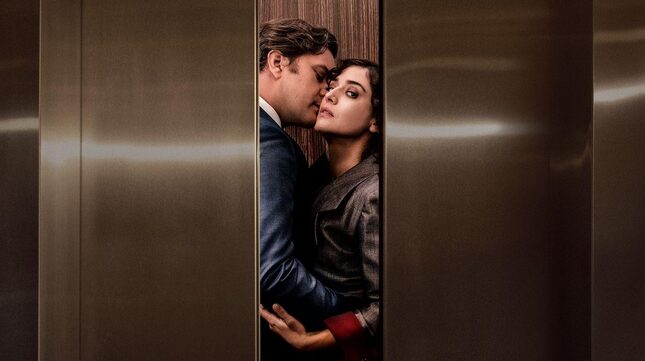
The narrative comes in fractured form: In an apparent attempt to dress up a story that’s literally dead on arrival, we get a bombardment of timelines. The show opens at Dan’s parole hearing after being convicted of second degree murder. He later swears to his daughter Ellen (Alyssa Jirrels) that he didn’t kill Alex, that he just had to say so in order to be released. The slow journey to exonerating him comes with many flashbacks to his affair with Alex, whom you can tell is a loose cannon early on when, during an encounter with Dan in an elevator (no sex is had in this one, unlike in the original), she expresses interest in puling the emergency stop, explaining, “Every time I see a ladder up against something, I feel the need to climb it.” Wild! Dan, meanwhile, is about to turn 40, loses a judicial nomination he was up for, and quotes Taylor Swift (“You play stupid games, you win stupid prizes”), so he’s primed for a midlife crisis that Alex is only happy to turn into a catastrophe.
In the original movie, Alex is, in a way, something that just happens to Dan. I mean, he’s clearly an asshole, but perhaps the movie isn’t explicit about it. The series seems to aim to balance out the blame here, a point underlined in the aforementioned Variety interview with Jackson, in which he says Lyne’s 1987 original “is incredible, but the gender dynamics are impossible to wrap your head around.” The piece goes on: “This time, Dan isn’t exactly a victim. In fact, he’s kind of a shithead, in Jackson’s opinion: ‘The second his principles bump up against his convenience, he chooses his convenience.’” All the changes do is render subtext into text for the comprehension-challenged.
And they do so in a needlessly convoluted manner. The constant hopping around to flashback within flashback only gives the impression of tight pacing. The actual effect can be confusing, if you’re invested enough to be confused. The main visual contrasts between the past and present are the puffiness of Jackson’s hair (his contemporary look is a kind of billowing Bernie Madoff thing without the receding hairline, while the previous one is more slicked back) and his use of a Palm Pilot. In Episode 3, we switch to Alex’s perspective, a tantalizing prospect retracing some steps in the first two episodes that disappoints in that it has no real interest in getting under her skin, just in showing more of her external crazy. Rashomon this ain’t.
You can feel the immense effort to make this a thing. Dan tells the court about “irresistible impulses” as we see his own taking over, and the lectures on Carl Jung that Ellen transcribes seem to be there to comment on the psychology at hand. It’s all a needless gesture at depth. If there’s any doubt about us not knowing what we’ve got ’til it’s gone, the new Fatal Attraction makes it clear. It’s already doing so much, but it’s going to take much more to resurrect the erotic thriller.
 Keep scrolling for more great stories.